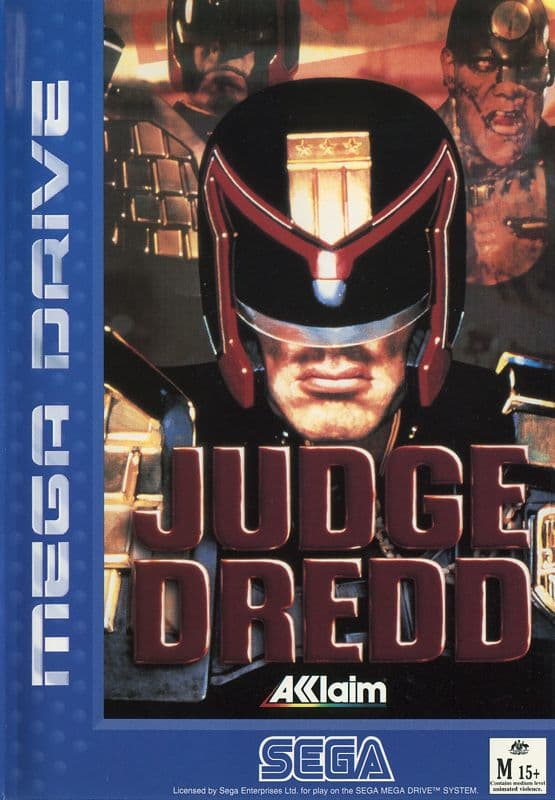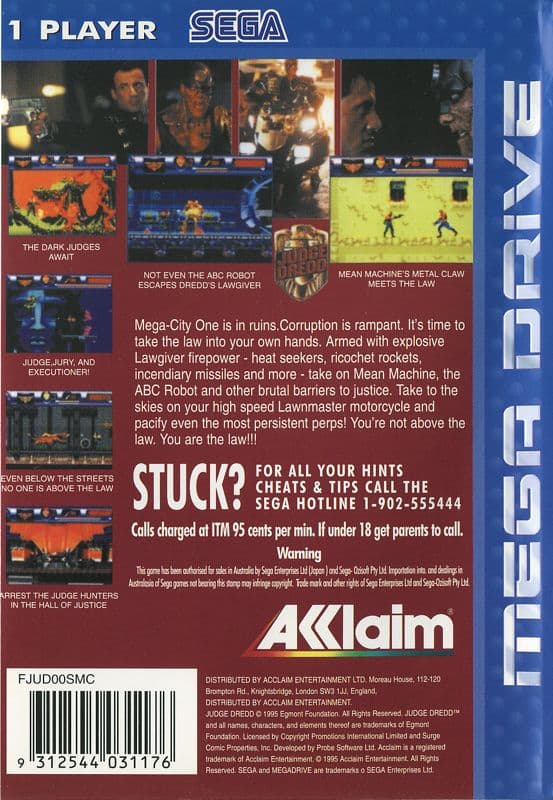
Judge Dredd
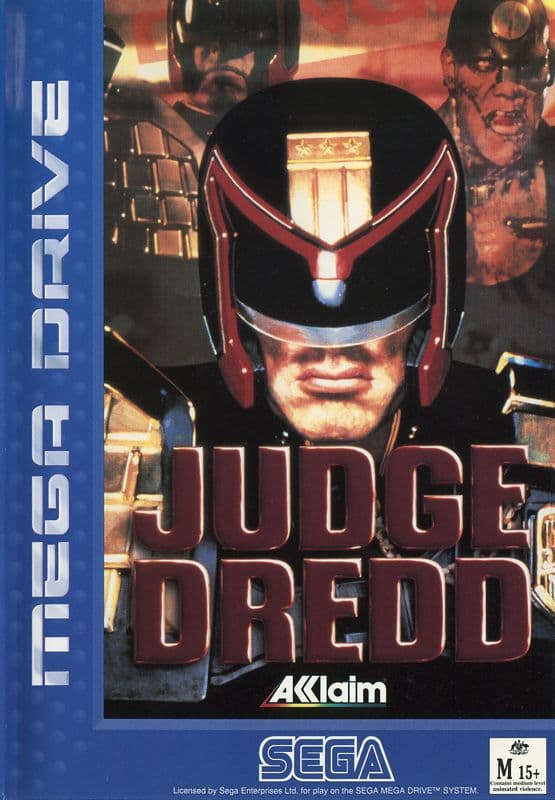
Everything changed with this project. New publisher, new development partner, and finally, a chance to work on proper console hardware. Sega published the game, but we subcontracted the development from Probe Software. Probe was becoming well known for these kinds of projects, though many of their games were actually built by freelance contractors working under their banner.
Working on Console Hardware
It was a dream to finally get my hands on a console. For the time, the Megadrive was really powerful, with dedicated hardware that made everything much easier. Full eight-way hardware scrolling, loads of hardware sprites - features that home computers just couldn't match. After years of battling limited hardware on the Commodore 64 (C64) and Amiga, the Megadrive felt like breathing room.
The character-mapped screen was particularly nice. Unlike the computers I'd worked on, manipulating the screen was quick and easy. The Megadrive was probably the nicest place to develop 2D platform games at the time.
The Stallone Connection
I was also a big fan of Stallone films, so this felt like the perfect project. The movie tie-in gave us solid source material and a clear vision for what the game should be. It wasn't just another platform game - it had the weight of a major film franchise behind it.
Development Challenges
Development wasn't as smooth as working with Team 17 had been. Probe had a lot of work on their plate, and it was often a case of waiting to climb up the priority list. Communication wasn't always straightforward, and getting time with their project managers required patience.
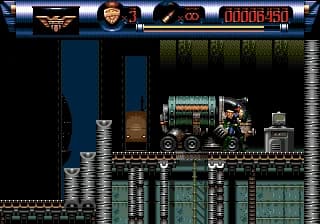
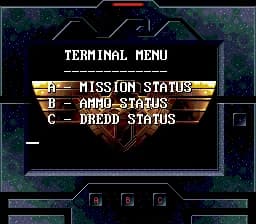
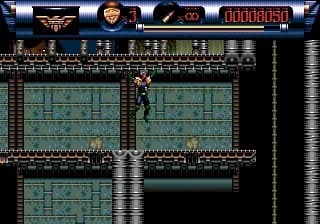
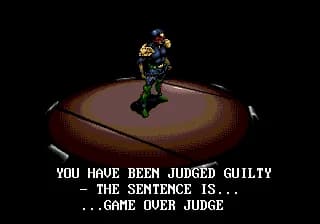
Looking back at the YouTube videos now, it was a solid game with smooth controls and good production values. I think I might have even built my own mini video player for cutscenes. The game holds up reasonably well - nothing groundbreaking, but a competent licensed platform game from an era when those were hit or miss.
The 32X Version That Never Was
Here's a little-known fact: I actually converted and enhanced Judge Dredd for the Megadrive 32X. The 32X was a hardware add-on for the Megadrive, essentially turning it into a more powerful machine. It was extremely complex to program - you were essentially managing two separate systems at once - but it had a lot of power under the hood.
The 32X was the first time I realized that building code in assembly was about to end. The hardware used a Reduced Instruction Set Computer (RISC) processor that made assembly code very time consuming and difficult to write. The Megadrive's 68000 was a Complex Instruction Set Computer (CISC) processor - one instruction could do quite a lot. Need to move data and update a pointer? One instruction. The 68000 felt natural to write assembly for.
RISC was different. Each instruction was simple and only did one small thing. To do what one 68000 instruction did, you'd need several RISC instructions. Worse, you had to think about instruction scheduling and pipeline stalls - basically making sure the processor didn't sit idle waiting for data. The 68000 handled a lot of that for you. With RISC, it was all manual optimization, and it was tedious.
The complexity just wasn't worth it anymore. Looking back, this was the first time I wrote game code in C language. It was a significant shift - trading the raw control of assembly for the productivity and maintainability of a higher-level language.
I was really proud of the work. The enhanced version had better graphics, smoother animation, and took advantage of the extra processing power the 32X offered. It felt like pushing the game to what it should have been.
But there was a problem. The 32X didn't sell. Sega had misjudged the market, and gamers weren't interested in an expensive add-on when the next generation of consoles was already on the horizon. The finished version of 32X Judge Dredd was never released. All that work, all those enhancements, just sat on a shelf somewhere.
It was a harsh lesson in the realities of the games industry. You could do great work, pour hours into making something better, and it still might never see the light of day because of market forces completely outside your control.
What I Learned
This project taught me the reality of working with subcontractors and multiple stakeholders. It wasn't as straightforward as having everyone in the same building, but it was valuable experience in how larger game projects were actually made. The Megadrive hardware itself was a pleasure to work with, confirming what I'd suspected - console development was where I wanted to be heading.
Screenshots